C2RM… To Know More
Something Awesome Is In The Work
DAYS
HOURS
MINUTES
SECONDS
imtiazahamed219@gmail.com
9903869074
Kolkata, India


Adoni, India
Jamshedpur, India
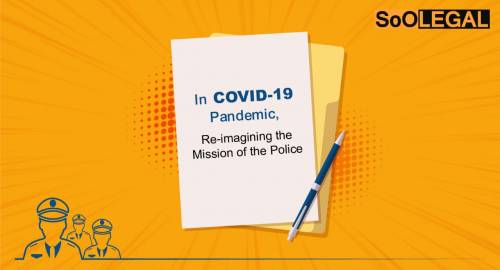
During this unfortunate pandemic, Indian police performed a critical role in avoiding child rights violations, unethical tactics, and violence.The establishment of a Centre for the Protection of Children's read more
During this unfortunate pandemic, Indian police performed a critical role in avoiding child rights violations, unethical tactics, and violence.
The establishment of a Centre
for the Protection of Children's Rights is a significant victory for children
in India. This statement occurred on the eve of the National Police Academy's
'Child protection during COVID-19' webinar, which was held on May 12,
2020, in conjunction with UNICEF.
Mr. Atul Karwal, IPS,
Director, National Police Academy, announced the plan to establish a dedicated Centre
for the Protection of Children's Rights, saying, "The police, in
collaboration with the community, can act as a force multiplier to enhance the
effectiveness with which they support children during COVID-19."
COVID-19 has wreaked havoc on
the conditions in which children grow and develop. Disruptions to families,
friendships, daily routines, and the broader community can have a detrimental
effect on children's well-being, development, and safety.
Furthermore, efforts aimed at
preventing and limit the spread of COVID-19 can put children at danger.
Quarantine and isolation measures implemented at home, at facilities, and in
zones can all have a detrimental influence on children and their families.
There is also evidence that domestic violence is on the rise.
For example, during the last
several weeks of the lockdown, CHILDLINE, a children's emergency helpline,
recorded a 50% spike in calls from distressed youngsters. Families may also
resort to negative coping techniques such as child labour or child marriage
during COVID-19. The Minister of Women and Child Development of the Government
of India recently revealed that CHILDLINE's actions had prevented 898 child
weddings since the lockdown began.
During the COVID-19 pandemic, there is an increased risk of
violence towards children.
The COVID-19 pandemic may
have resulted in significant changes for many children and their families, not
only as a result of the lockdown, restricted measures, social isolation,
changing demographics, and a reduction in available health services, but also
as a result of a sudden and possibly long-term increase in child poverty and
family uncertainty. Through a cascading cascade of factors that might drive,
trigger, or amplify potential stressors, the pandemic constitutes a crisis not
only for our health and economy, but also for family well-being. There are few
precedents for the circumstances caused by COVID-19, but we can build on
previous work in crisis or emergency situations where scenarios of quickly
escalating stress are followed by abrupt changes to earlier conditions.
Individual development
consequences of disasters and mass violence can be defined in terms of the
exposure dose or cumulative hazards that represent major threats or
disturbances to individuals, families, or communities. Thus, the COVID-19
pandemic has been viewed as a multisystem cascading worldwide calamity that has
significantly impacted the lives of children on many levels and for which our
society were unprepared. Indeed, research on COVID-19 is beginning to indicate
the harmful consequences of the lockdown and the limits imposed, as well as the
effects of social pressures on family members, emphasising the need for
long-term monitoring of children's and teenagers' mental health. Emerging data on both healthy parenting and
child and adolescent mental health emphasises that the amount of the influence
is dependent on vulnerability variables such as developmental age, past mental
health disorders, educational and socioeconomic position, or being confined.
Through the prism of criminological theories, there is an increased
likelihood of violence.
Criminological theories
explore the various factors that contribute to family violence and child abuse,
as well as why there is a higher likelihood of violence in critical situations.
One of the frequent assumptions in the literature is the intergenerational
transmission of violence, which is summed up in the phrase "violence
begets violence": that childhood violence and/or neglect increases the
likelihood of perpetrating violence later in life. Our understanding of
intergenerational transmission of violence is still restricted due to the
concept's complexities. Several theories, including social learning theories,
social information processing theory, attachment theory, and social control
theory, have attempted to explain the mechanisms involved.
An overemphasis on child
maltreatment events, on the other hand, may turn out to be static or limited,
or may even interpret subsequent outcomes as a direct result of the early
exposures. Similarly, the impact of heredity on aggressive conduct may be
mitigated by contextual factors. As a result, nature and nurture should be
viewed not as distinct and separate variables in human behaviour, but as part
of the same process in the violence done against children in times of crisis.
Through the lens of socio-ecological models, there is an increased
likelihood of violence.
Socio-ecological explanations
can provide a broad framework for understanding how the COVID-19 epidemic has
affected social ecologies and altered interactions between people and their
surroundings. Changes in this reciprocal interaction may yield new definitions
for people's cognitions, emotions, behaviours, and the underlying mechanisms
that underpin them. As a result, this mutual process reveals itself in changing
physical, interpersonal, economic, and political contexts, as well as in human
adaptation and modification of these environments. Given that child
maltreatment is an interactive issue, the COVID-19 disaster has impacted
children's ecological systems on multiple levels. It has
created or exacerbated a number of risk factors for child abuse and neglect related
to the child's and caregivers' traits, family dynamics, and the larger social
and cultural context. As a result, we evaluate these hazards via the prism of
Belsky's ecological integration model at each of its stages. We also include
the transactional process within this model, which means that at each
ecological level, the complex interaction of potentiating and compensating
forces effects both children and their ecological systems. Ecological levels of
analysis not only capture and systematise the numerous variables that
contribute to child abuse, but they also allow for the incorporation of
complementary approaches such as socio-cognitive approaches to parenting, which
can aid in understanding how environmental changes influence the incidence of
child abuse.
Increased oppositional
behaviour and limit testing in children are expected at the micro system level.
This behaviour may evoke harsh responses from parents, who may be experiencing
parental burnout as a result of, or as a result of, the pandemic's
implications. Children's concern and uncertainty about the epidemic may
exacerbate their parents' anxiety. The COVID-19 pandemic may also exacerbate
pre-existing mental health issues and lead to an increase in instances among
children and adolescents, raising tensions in the household. According to a
recent survey, more than one-fourth of parents reported poor mental health in
their children since the start of the epidemic, one-seventh reported worsening
behavioural health, and nearly one-tenth reported worsening in both. Children with special education needs are also
at danger; the disturbance of their daily routines may cause them to become
angry and irritable. Overall, stressed parents are more likely to respond
aggressively or abusively to their children's nervous actions or demands.
According to preliminary study, the scenario generated by the COVID-19 crisis
is exceedingly demanding and stressful for parents, and it greatly raises their
overall stress levels. Previous research has also found that a high-stress
family setting is a strong predictor of child physical abuse and neglect.
Finally, in the COVID-19
environment, views toward children and their rights are a significant risk
factor for violence. Even though research has proved that children are not the
primary cause of the epidemic, they have been accused of being vectors of viral
transmission in several countries, even by official leaders, and are regarded
more contagious than asymptomatic adults. This may have resulted in some social
rejection and a lack of empathy for the negative effects of house confinement
for their development and well-being. In fact, while adult society is resuming
normalcy, most countries' schools, kindergartens, and even playgrounds remain
closed.
The police have a key role to
play in such a case. Whether it is to assist children in distress, to ensure
violence prevention in migrant camps and temporary shelters, to be watchful and
sensitive to any reports of violations of children's rights, or to ensure
children are directed to child protection agencies.
During COVID-19, UNICEF
developed a guideline for police on their responsibility in safeguarding
children from violence and exploitation. These are being adapted and
implemented in a number of states.
The webinar commented on the
COVID-19 specific problems posed by children and highlighted the importance of
police as citizens' advocates, particularly for children. It also served as a
forum for police officers from all over the country to discuss their experiences
and lessons learned.
The long-term goal of the
interactive knowledge session was to create a network/cohort of officers who
were interested, informed, and skilled in child safety issues, hence creating a
nationwide movement to protect children from violence and harm.
The police are one of
UNICEF's most important partners in its work to protect children. In every
circumstance involving children in distress, they are frequently the first to
respond. As a result, their sensitivity to children and the manner in which they
handle cases are crucial for a child's experience - and trust - in the justice
system "In her speech to the webinar, Dr. Yasmin Ali Haque, UNICEF
Representative in India, said
"In India, children
account for 40% of the population. As UN Secretary General Antonio Guterres
recently stated, children may not be the face of the COVID-19 Pandemic, but
they are one of its most vulnerable victims.
"We are happy to cooperate with the National Police Academy to ensure that the effects of COVID-19 are reduced in the population and that children receive the protection they deserve from a duty bearer of such crucial importance as the police," Dr. Haque added.
The effectiveness of
collaborative partnerships
UNICEF
operates in 17 Indian states and has a close relationship and partnership with
the police. UNICEF is providing technical assistance to state police in places
such as Assam, Bihar, Chhattisgarh, Jharkhand, Tamil Nadu, and Uttar Pradesh on
child friendly policing projects, which has resulted in child sensitive
policing becoming a part of the culture in state police forces.
In
Jharkhand, UNICEF and the police have collaborated to create a set of
indicators and a committee that monitors and certifies police stations as
child-friendly. These are not just infrastructure-related, but also refer to
training and the procedures that police use when dealing with instances
involving children.
Using
the Nirbhaya money, UNICEF is assisting the Kolkata Police Department in
planning and executing programmes to prevent violence against women and
children in West Bengal.
In Odisha,
UNICEF and the state police undertook a nationwide campaign to prevent child
sexual abuse, demonstrating the critical role of the police in prevention and
response.
Can a registered Will be challenged in the Indian Court? In India, the concept of Will has its deep-rooted origin for a very long time; its importance grows with the feeling of transferring family wealth read more
Motor Vehicle Act, 1988 nowhere define the term “Legal Representative”, however an application for compensation under section 166 of the MV act, 1988 may be made by the Legal Representative of the deceased. read more
Motor Vehicle Act, 1988 nowhere define the term “Legal Representative”, however an application for compensation under section 166 of the MV act, 1988 may be made by the Legal Representative of the deceased. MV act includes provision for who all can apply for compensation in the Motor Accident Claim Tribunal in case they get involve in a road accident. As per section 166 of MV act:
(1) An application for compensation arising out of an accident of the nature specified in sub-section (1) of section 165 may be made—
a) by the person who has sustained the injury; or
b) by the owner of the property; or
c) where death has resulted from the accident, by all or any of the legal representatives of the deceased; or
d) by any agent duly authorised by the person injured or all or any of the legal representatives of the deceased,
As per the section, a person can claim compensation in MACT if, they had sustained an injury in the accident or they are the owner of the property involved/damaged in the accident or they are the Legal Representative of the person who died in road accident or they have been duly authorized by the person who died in road accident. It is always a dispute before the Court in regard to section 166 (C) and (D), as nowhere in the entire act has described the term “Legal Representative”. So, can a married sister be legal representative? Can a brother who is living separately be a legal representative? Can a person be a legal representative who has lost someone in blood relation?
In several cases it has been argued that since the married sister, brother who is living separately or any such person in a blood relation were not dependent upon the deceased and thus cannot seek compensation. However the rule of dependency was also clarified in several cases, where the court ruled out that a person who was not dependent on the deceased can seek compensation.
In the matter of Gujarat State Road Transport Corporation, Ahmedabad v Ramanbhai Prabhatbhai and Anr ( 1987 3 SCC 234), the question involved in the case is whether a brother of a person who killed in a motor vehicle accident can claim compensation? The Apex court has given the answer in affirmative and held that
“The first set of cases are those which are referred to in paragraph 5 of the above decision which lay down that every claim application for compensation arising out of a fatal accident would be governed by the substantive provisions of sections 1A and 2 of the 1855 Act and no dependent of the deceased other than the wife, husband, parent or child would be entitled to commence an action for damages against the tort tensors. Amongst these cases are P.B. Kader and others v. Thatchamma and others, A.I.R. 1970 Kerala 241 and Dewan Hari Chand and others v. Municipal Corporation of Delhi and another, A.I.R. 1973 Delhi 67. The second group of cases are those referred to in paragraph 6 of the decision of the Gujarat High Court. They are Perumal v. Ellusamy Reddiar, [1974] ACJ 182 (Mad) and the Vanguard Insurance Co. Ltd. v. Hanumantha Rao, [1975] ACJ 344 (Andhra Pradesh). These cases lay down that while the compensation payable under section 1A of the Fatal Accidents Act, 1855 is restricted to the relatives of the deceased named therein the compensation payable under section 2 thereof may be awarded in favour of the representatives of the deceased who are entitled to succeed to the estate of the deceased. The third group of cases are those referred to in paragraph 7 of the judgment of the Gujarat High Court. They are Mohammed Habibullah and another v. K. Seethammal, A.I.R. 1967 Mad. 123; Veena Kumari Kohli v. Punjab Roadways, [1967] ACJ 297 (Pb.) and Smt. Ishwar Devi Malik v. Union of India, A.I.R. 1969 Delhi 183 which take the view that a claim for compen- sation arising out of the use of a motor vehicle would be exclusively governed by the provisions of sections 110 to 110-F of the Act and bears no connection to claims under the 1855 Act and the Claims Tribunal need not follow the princi- ples laid down under the latter Act. Having considered all the three sets of decisions referred to above, Ahmadi, J. who wrote the judgment in Megjibhai Khimji Vira and another v. Chaturbhai Taljabhai and others (supra) came to the conclusion that an application made by the nephews of the deceased who died on account of a motor vehicle accident was clearly maintainable under section 110-A of the Act.”
In another case Gafaran and Ors v Tilakraj Kapur and Ors (2005 ACJ 1711), in this case two married sisters of the deceased were not awarded any compensation on the ground that they were not dependant on deceased, it was held that
“Under section 166 of the Motor Vehicles Act, where the death has resulted from the accident, the claim can be preferred by all or any of the legal representatives of the deceased. This provision does not speak of dependants or all such legal representatives being dependent on the deceased. Any legal representative of the deceased can prefer claim before the Tribunal irrespective of he being dependent or not dependent on the deceased.”
In the case New India Assuarance co. ltd v Ramya Raghavan and Anr. (2006 ACJ 2347), the petitioner was a married daughter of the deceased, the court awarded compensation and held that
“The petitioner is a named dependant under section 1-A of the Fatal Accidents act and entitled to seek compensation for loss of dependency and other permissible heads. The proof of actual dependency is not necessary in law. However, the legal representatives under section 2 of Fatal accidents Act, 1855, are entitled to seek compensation for loss to estate and they cannot seek general damages and loss of dependency. That apart, note 6 of Second schedule enables the legal heirs to seek compensation under section 163-A. The named dependants are entitled to seek compensation under section 163-A.”
In the case Manjuri Bera v Oriental Insurance company ltd and anr (2007 10 SCC 643), the question before the court was whether any compensation is payable where the claim filed by a legal representative of the deceased who was actually not dependent on him. The court answered the same in affirmative and held that
“As observed by this Court in Custodian of Branches of BANCO National Ultramarino v. Nalini Bai Naique the definition contained in Section 2(11) CPC is inclusive in character and its scope is wide, it is not confined to legal heirs only. Instead it stipulates that a person who may or may not be legal heir competent to inherit the property of the deceased can represent the estate of the deceased person. It includes heirs as well as persons who represent the estate even without title either as executors or administrators in possession of the estate of the deceased. All such persons would be covered by the expression 'legal representative'. As observed in Gujarat State Road Transport Corporation v. Ramanbhai Prabhatbhai and Anr., a legal representative is one who suffers on account of death of a person due to a motor vehicle accident and need not necessarily be a wife, husband, parent and child.”
In the case Montford Brothers of St. Gabriel & Anr. V United India Insurance & anr. ( Civil appeal no. 3296-3270 of 2007), a charitable society claimed compensation for the death of a “Brother” of the society in a motor car accident. The apex court awarded the compensation to the society.
Thus from the above discussed landmark judgement, a married sister/daughter, a brother who is living separately or even a charity can seek compensation before the MACT.
Net Banking Frauds The customer obtained a loan of Rs. 20 lakhs from a Public Sector Undertaking Bank and thereafter the amount was fraudulently siphoned from his bank account through four RTGSs without read more
Withdrawal of Mutual Divorce Proceedings When both parties agree on the dissolution of marriage in a read more
Withdrawal
of Mutual Divorce Proceedings
When both parties agree on the
dissolution of marriage in a friendly manner, rather than battling in court and
defaming each other, it is more harmonic. They can file a petition in a
District Court under Section 13B of the Hindu Marriage Act, 1955, and the Court
can award them a divorce decision. The divorce will not be affected by
proceedings before the Panchayat; the parties must resolve it through Matrimonial
Courts. The Marriage Law (Amendment) Act of 1976 included this clause not
included in the Hindu Marriage Act.[1] The Hindu Marriage Act of
1955, Section 13B, is based on the same grounds as the Special Marriage Act of
1954, Section 28. Section 13B (2) states that the parties must wait at least
six months after presenting the petition, and before the conclusion of the
eighteen months, they must take a step forward to the court together. After
reviewing the case, if the court believes all facts are accurate, it can
approve the divorce petition.
The following grounds can be used to
submit a petition for mutual consent divorce:
According to Sec 23(1) (bb) of the
Family Law Act, permission in the case of mutual consent divorce shall not be
gained by fraud, force, or undue influence as per Sec 23(1) (bb) of the Hindu
Marriage Act,1955.
Can
consent be withdrawn in mutual consent divorce?
Suppose
one partner changes their mind and wishes to salvage their marriage. In that
case, they can make an application with the court where their divorce is being
processed, declaring that they want to withdraw their permission for the
divorce and give their marriage a second opportunity. If both the husband and
wife agree to the withdrawal, the case can be amicably withdrawn, and the court
can dismiss the petition.[2]
If one spouse withdraws the divorce petition? What remedy does the other
spouse have?
If
one spouse files an application with the court stating that they do not wish to
pursue Divorce by Mutual Consent, the court will not give a divorce decree. It
is possible during the six months when the petition is pending in court.[3]
If
the court determines that the unilateral withdrawal of consent is not genuine,
it might issue a divorce judgment and dissolve the marriage. As a result, the
court will disregard the withdrawal of consent and issue the decree.
It
cannot be regarded as an actual act if the money is taken later and the wife
withdraws her permission and has not made any effort to reconcile in the past
seven years.
In
other circumstances, the wife withdraws her permission by filing a court action
to demand more permanent alimony than what was agreed. The act of withdrawing can
be used as a means of harassment.
Is
it possible to withdraw the permission after filing for Divorce by Mutual
Consent?
In
Jayashree Ramesh Londhe v Ramesh Bhikaji,[4] the
court decided that neither party can withdraw from the joint petition for
divorce unless and until both parties consent to the withdrawal.
In
the case of Nachhattar Singh v Harcharan Kaur[5],
the court decided that once the parties voluntarily submit a petition for
divorce by mutual consent and all of the requirements set out in Section 13B(1)
of the Hindu Marriage Act, 1955 are met, the consent is irrevocable.
In
the case of Sureshta Devi vs. Om Prakash,[6]
the court found that mutual consent should exist unless and until a divorce
decision is issued. The
six-month time frame was chosen to allow the parties to change their minds.
Both parties are not required to modify their minds. A single party can also do
it.
Later,
in the case of Ashok Hurra v Rupa Zaveri, the court held that mutual consent
should be maintained until the divorce judgment is issued, even if one of the
spouses does not withdraw their consent within the 18 months.
In
Anil Kumar Jain vs. Maya Jain, the court noted that consent obtained by the
parties when filing the petition must be maintained until the case is brought
up for order and a divorce judgment is issued. The Supreme Court can issue many
directions to offer comprehensive justice to the party while exercising its
exceptional power under Art. 142 of the Constitution.
If
the party withdrawing the consent does not convey it to the court, either
directly or via their counsel, the court will assume the consent to be ongoing.
The
Rajasthan High Court's Division Bench ruled that an affirmative act must
withdraw the party's permission to divorce at the time of the second motion.
If
there is no sufficient reason for the withdrawal of permission, the court will
assume that the consent was withdrawn under duress. After jointly consenting to
divorce, one party withdraws their approval, which is considered mental
cruelty.
In
the case of Suman vs. Surendra Kumar[7],
the husband did not appear at the second stage after filing a joint divorce
petition. Because one party had abandoned the case, the Family Court decided
that mere silence did not constitute a withdrawal of consent. As a result, the
conclusion must be reached in favor of consent rather than the absence of
consent. In
the case of Suman vs. Surendra Kumar, the husband did not appear at the second
stage after filing a joint divorce petition. Because one party had abandoned
the case, the Family Court decided that mere silence did not constitute a
withdrawal of consent. As a result, the conclusion must be reached favoring
consent rather than the absence of consent.
Conclusion
Opting
a mutual consent divorce avoids squabbles and saves a significant amount of time
and money. Mutual consent divorce is one of the best-provided possibilities,
considering the increasing number of divorce applications As a result, it is
the simplest type of divorce and the least expensive and time-consuming
compared to disputed divorce. It is an easy and hassle-free divorce method, too,
because even during the six months between the first and second motions, any
party can withdraw by submitting an application with the court saying that they
do not want to get a divorce by mutual consent. The opposite party would only
have one choice in such a situation: petition for disputed divorce. Hence It is
the shortest type of divorce, saving time, money, and even mental anguish.
*****
[1]
https://highcourtchd.gov.in/hclscc/subpages/pdf_files/4.pdf.
[2]
https://www.scconline.com/blog/post/2020/11/09/divorce-by-mutual-consent-and-contempt-of-court/.
[3]
https://vakilsearch.com/advice/can-mutual-divorce-be-done-after-6-months/.
[4]https://indiankanoon.org/doc/921070/#:~:text=Jayashree%20Ramesh%20Londhe%20vs%20Ramesh%20Bhikaji%20Londhe%20on%2015%20February%2C%201984&text=JUDGMENT%20B.C.%20Gadgil%2C%20J.&text=This%20is%20an%20appeal%20filed,a%20divorce%20by%20mutual%20consent.
[5]
https://indiankanoon.org/doc/1265343/.
[6]
http://ijtr.nic.in/Smt._Sureshta_Devi_vs_Om_Prakash_on_7_February,_1991.PDF.
[7] AIR 2003 Raj 155
Unnatural Sex with a Female has been classified as Rape under section 377 I.P.C. Unnatural Offence is an act or behaviour to commit a crime that is contrary to what is considered read more
Unnatural
Sex with a Female has been classified as
Rape
under section
377 I.P.C.
Unnatural Offence is an act or behaviour to commit a crime that is contrary
to what is considered a natural offence. Section 377 of the IPC deals
with the unnatural offences that state that “whoever voluntarily has carnal
intercourse against the order of nature with any woman, man, or animal, shall
be punished with life imprisonment or with the imprisonment of either
description for a term which may extend to ten years, and shall be liable to
fine.” According to the interpretation in this section, penetration is enough
to constitute carnal intercourse. This section refers to the English law[1] offences
of sodomy and bestiality. Consent is immaterial in the cases of unnatural
offences, as the text of this clause indicates, and the party consenting would
be accountable as an abettor. This section is intentionally unclear since it is
impossible to determine what goes against nature’s order.
The Buggery Act of 1533
is the source of Section 377 of the Indian Penal Code. This law has never been
modified by Parliament since it was enacted until recently. This rule was
founded on Judeo-Christian moral and ethical principles, which views sex to be
merely functional, i.e. for procreation, and therefore believe homosexuality to
be unnatural and against nature’s order. The functional basis is mentioned to
identify what is natural, which indicates that every organ in the body has a
certain role in fulfilling, and using that organ for a reason other than that
function is unnatural.[2] As
a result, any sex other than penile-vaginal will be deemed unnatural. Anything
else than procreative sex is deemed abnormal using the same premise.
In the case of Khanu v.
Emperor,[3]
the court held that the major object of carnal intercourse is that there should
be possibility of conception of human beings, which in the case of sexual
intercourse by inserting penis in the mouth is impossible.
The
Indian Penal Code defines Section 377 as follows;
Whoever voluntarily has carnal intercourse against the order of nature
with any man, woman or animal, shall be punished with imprisonment for life, or
with imprisonment of either description for a term which may extend to ten
years, and shall also be liable to fine. Explanation.—Penetration is sufficient
to constitute the carnal intercourse necessary to the offence described in this
section.
Constitutional Validity of Section
377
In the case of Naz
Foundation v Government of Delhi & Ors,[4]
the constitutional validity of section 377 was challenged in the Delhi High
Court. It was alleged in this case that section 377 violated the basic rights
provided in Articles 14, 15, 19, and 21 of the Constitution by including
consensual sexual intercourse between two adults in private. It was further
argued that Article 21 could only be limited if there is a compelling state
interest, which is not present in this case.[5]
The petitioner further claimed that section 377’s legislative intent is based
on outdated stereotypes with no historical or logical support. In this case,
the two wings of the Union of India had filed wholly opposing affidavits. The
Ministry of Home Affairs attempted to explain the act’s continued existence by
citing public health, public disapproval, and social revulsion. On the other
hand, the Ministry of Health and Family Welfare backed the petitioners’
contention, claiming that presence of section 377 in the statute book inhibited
HIV/AIDS prevention efforts and that its removal would aid in the treatment of homosexuals
with HIV/AIDS.
The Ministry of Home
Affairs’ argument that popular morality or public disapproval cannot be a valid
ground for curtailing the right under Articles 14 and 21 was rejected by the
Delhi High Court. According to the court, the only kind of morality that can
pass the test of compelling state interest is constitutional morality and not
public morality. The constitutional morality is violated by Section 377 of the
IPC, which criminalizes homosexuals solely on the basis of their sexual
orientation. The court accepted all of the petitioners’ arguments and found
section 377 extra vires, which made it illegal for adults to engage in
consenting sexual acts in private. The court also held that the provisions of
section 377 would continue to apply to adolescents who engage in non-consensual
penile and non-vaginal intercourse.
In the case of Suresh
Kumar Koushal and others v. Naz Foundation & others[6],
religious entities and individuals including the All India Muslim Personal Law
Board, the Apostolic Churches Alliance, and the Utkal Christian Council
appealed the Delhi High Court’s judgement in the Supreme Court. They contended that
the legislature adopted section 377 to defend societal values and morals. Therefore
the Supreme Court agreed with this argument and overturned the High Court’s
decision.
The apex court had also
declared in the case of Navtez Singh Johar v. UOI[7]
that consenting adult gay sex is not a crime and that Articles 14 and 21 of the
Indian Constitution contradict Section 377’s current interpretation.
Applicability of the section in
today’s times
Section 377 IPC still
applies to sex with minors, non-consensual sexual acts, and bestiality, with
the exception of gay sex. Now, unnatural sexual assault with a female has been
classified as rape, and sexual assault with a minor, whether male or female, is
subject to the POCSO legislation.
There is a common misconception
that Section 377 has been repealed. Section 377 has been toned down to the
point where sexual behaviour of any kind among consenting people is no longer
illegal. There is a need for people, both men and women, to recognize their
rights that non-consensual sexual behaviour in adults, as well as all sexual
conduct with minors or animals without their agreement, is still illegal.[8]
Most often, cases of unnatural sex between husband and wife, the wife being a
victim of the heinous crime without her consent, there are situations where the
wife cannot bring herself to report the crime and suffer in silence as these
kind of issues are still a taboo in the society.
Under section 377 of the IPC, a wife can file a prosecution against her
husband for unnatural sexual offences.[9]
Because the section punishes sexual
intercourse outside the natural order regardless of an individual’s sexual
orientation or gender identity, such actions can be prosecuted under section
377 even if they are committed by heterosexual couples. Furthermore, the
criminal can be penalized under this clause even if the victim agreed to the
act (regardless of age). The victim’s permission is irrelevant to the
application of section 377, and a criminal act cannot be justified by the
victim’s assent.[10]
The
Punjab and Haryana High court stated in the case of State of Haryana v. Raj
Kumar that it is easy to level such allegations but even more difficult to
prove and, therefore, courts will always have to be cautious while dealing with
such allegations. The division bench of justices MMS Bedi and Hari Pal Verma
said that on the basis of the evidence presented, the allegations are
corroborated by other circumstances to show that one of the spouses has
indulged in unnatural acts, and therefore the marriage can be dissolved by a
decree of divorce.
Conclusion
This legislation is both beneficial and vulnerable to abuse. While
marital rape is not a crime in India, through this section, Indian women will
have a mechanism to have their husbands penalized if they perform unnatural
sexual actions on them. This section will serve as a tool in the hands of
Indian wives who suffer at the hands of their abusive husbands. Section 377, on
the other hand, has a lot of room for abuse because consent isn’t a criterion to
determine whether or not it should be used. Therefore, the complainant’s
permission to do the unnatural sexual act would not be enough to keep the
perpetrator out of jail. With changing times and changing laws, it is essential
that people start acting out towards the wrong being done to them, and therefore
it is essential that they know what can be done and what help they can get from
the law.
*****
[1] PSA
Pillai, Criminal Law 714(11th ed. Lexis
Nexis. 2012) 714.
[2] See
Burton Leiser, Homosexuality and the Unnaturalness Argument in SEX, MORALITY
AND THE LAW 44 (Gruen & Panichas eds., 1996)
[3] Khanu
v. Emperor, AIR 1925 Sind 286
[4] Naz Foundation
v. Govt. of NCT, 2010
CrLJ 94.
[5] KD
Gaur , Indian Penal Code 618(3rd ed. Universal Law Publ’g co pvt ltd.
2013).
[6]
Suresh Kumar Koushal v. NAZ Foundation, AIR 2014 SC 563.
[7]
http://recentscientific.com/unnatural-sexual-offences-and-its-current-legal-status-india%E2%80%93-review-literature
[8]
https://www.thequint.com/news/india/sec-377-applicable-under-what-circumstances
[9]
https://www.hindustantimes.com/punjab/forcible-unnatural-sex-in-marriage-is-cruelty-hence-a-ground-for-divorce-hc/story-Iga7sgtia5KQy4C436KPmL.html.
[10]
https://bnblegal.com/article/unnatural-offences/.
Canada is one of the most developed countries in the world that welcomes immigrants and talented people. The immigration laws of Canada have undergone various changes over the years, and now the country read more
Keep reading this article till the end as we are going to share with you the five approved by the Canadian immigration law you can immigrate to Canada.
Canada is a land of budding opportunities. However, to ensure the proper completion of developmental projects across the country, there is a constant need for people from around the world who can come to Canada to complete the projects.
Most of the work permits are connected with the approval from Labour Market Impact Assessments. However, work permits are not controlled in this way all the time. Skilled people can make their way to Canada without having to go through a tedious process.
As the name implies, the Express Entry route is the fastest way a person can make their way to Canada. This program evaluates the applicants based on their skills and then allows them to come to Canada almost every two weeks.
It’s the goal of the Canadian government to make immigrants the permanent residents of Canada. This is why it takes less than six months for people who have come to Canada via the Express route. However, it is to be noted that you might have to pay thousands of dollars to apply for permanent nationality.
The best thing about Canada is that not everything is controlled by the central government. Based on the needs of different provinces, the Canadian immigration law allows people to enter Canada via Provincial Nominee Programs.
The individual provinces handle these programs, and the entry requirements are different for each province. However, it is to be noted that PNPs are simpler and provide a faster way to enter Canada. Applicants of PNPs are scanned based on their specific skills. Talented people are more than welcome to Canada through PNPs.
The immigration process becomes easier if you have someone in your family who can sponsor you in Canada. If you have a family member of yours who has Canadian nationality and is over 18 years of age, they can sponsor you for the nationality of Canada.
One thing to note here is that this process can be a bit lengthy. The maximum duration for processing your application can go up to 24 hours based on your relationship with a Canadian resident. Fees differ too, depending on your relationship too.
There’s no doubt about the fact that the educational system in Canada is one of the best educational systems in the world. If you want to pursue higher education and want to learn from the best teachers in the world, then going to Canada can prove to be the best option for you.
Remember that the process for applying as a student in Canada requires you to follow a complete procedure. Things like getting your Letter of Acceptance and so on can take a lot of time, so stay prepared for making changes to your schedule accordingly and complete your application process.
In a recent case of Avneesh Chandan Gadgil and Another vs Oriental Bank of Commerce and Others Civil Appeal No. 6898 of 2021, a two Judge Bench of the #SupremeCourt comprising of J. M.R. Shah and J. Sanjiv read more
In a recent case of Avneesh Chandan Gadgil and Another vs Oriental Bank of Commerce and Others Civil Appeal No. 6898 of 2021, a two Judge Bench of the #SupremeCourt comprising of J. M.R. Shah and J. Sanjiv Khanna passed a #Judgment dated 24-11-2021 on the issue, whether #delay in filing #appeal under the #Recovery of #Debts due to #Banks and #FinancialInstitutions Act, 1993 (1993 Act) before the Debt Recovery Tribunal-I (#DRT) can be condoned.
In this case, an Appeal was initially filed by Oriental Bank of Commerce, the Respondent herein, before the DRT against an Order dated 14-07-2011 passed by a Recovery Officer.
The said Appeal was filed by the Respondent-Bank beyond the period of limitation of 30 days as stipulated in Section 30 of the 1993 Act, with a prayer to condone the delay in filing the Appeal. The DRT condoned such delay by applying Section 5 of the Limitation Act, 1963, (Limitation Act), vide Order dated 05-06-2014. The relevant provisions are reproduced below for easy reference:
Section 30 of the 1993 Act: Appeal against the order of Recovery Officer
(1) Notwithstanding anything contained in section 29, any person aggrieved by an order of the Recovery Officer made under this Act may, within thirty days from the date on which a copy of the order is issued to him, prefer an appeal to the Tribunal.
(2) On receipt of an appeal under sub-section (1), the Tribunal may, after giving an opportunity to the appellant to be heard, and after making such inquiry as it deems fit, confirm, modify or set aside the order made by the Recovery Officer in exercise of his powers under sections 25 to 28 (both inclusive).
Section 5 of the Limitation Act: Extension of prescribed period in certain cases
Any appeal or any application, other than an application under any of the provisions of Order XXI of the Code of Civil Procedure, 1908 (5 of 1908), may be admitted after the prescribed period if the appellant or the applicant satisfies the court that he had sufficient cause for not preferring the appeal or making the application within such period.
Explanation.—The fact that the appellant or the applicant was missed by any order, practice or judgment of the High Court in ascertaining or computing the prescribed period may be sufficient cause within the meaning of this section.
Aggrieved by the Order dated 05-06-2014 passed by the DRT in favor of the Respondent-Bank, the Appellants herein filed an Appeal before Debts Recovery Appellate Tribunal (DRAT). The DRAT passed an Order dated 18-11-2014 and set aside the Order dated 05-06-2014 passed by the DRT on the ground that Section 5 of the Limitation Act won’t apply to an Appeal filed before DRT against the Order passed by the Recovery Officer.
#supremecourt #delay #appeal #recovery #drt #condone #limitation
A Two Judge Bench of the Hon’ble #SupremeCourt of India comprising of Justices Ajay Rastogi and Abhay S. Oka passed a #Judgment dated 22-11-2021 in the case of Kewal Krishan v. Rajesh Kumar {Civil Appeal read more
A Two Judge Bench of the Hon’ble #SupremeCourt of India comprising of Justices Ajay Rastogi and Abhay S. Oka passed a #Judgment dated 22-11-2021 in the case of Kewal Krishan v. Rajesh Kumar {Civil Appeal Nos. 6989-6992 Of 2021(Arising out of SLP (C) Nos. 2033-2036 of 2016)} and held that payment of #price is an essential part of a ##sale and that Sale Deed executed without payment of #consideration would not have any legal effect.
In the present case, one, Mr. Kewal Krishan (Appellant) and his elder brother, Mr. Sudarshan Kumar (one of the Respondents) had acquired Properties (Suit Properties) under the Sale Deeds dated 12-08-1976 and 19-10-1976. On 28-03-1980, the Appellant executed a Power of Attorney in favour of his elder brother, Mr. Sudarshan Kumar. Subsequently, on the basis of the said Power of Attorney, two Sale Deeds were executed by Mr. Sudarshan Kumar on 10-04-1981. The first Sale Deed was executed by him by which he purported to sell part of the Suit Properties to his minor sons and the sale consideration was shown as Rs.5,500/-. The other Sale Deed was executed by Mr. Sudarshan Kumar in favour of his wife in respect of the remaining part of the Suit Properties and the sale consideration for the same was shown as Rs.6,875/-. In the instant case, Mr. Sudarshan Kumar, his Wife and his Sons were the Respondents.
On 10-05-1983, two separate Suits were instituted by the Appellant before the Trial Court, Punjab. One Suit was filed against Mr. Sudarshan Kumar and his two Sons and the other Suit was against Mr. Sudarshan Kumar and his Wife. Both the Suits were filed for seeking injunction and for restraining the Defendants from interfering with the possession of the Appellant and from alienating the share of the Appellant in the Suit Properties. Also, a prayer was made for passing a Decree for possession. On 23-11-1985, the Plaints in both the Suits were amended to incorporate the relief sought for declaration that the Power of Attorney and the Sale Deeds that were executed by Mr. Sudarshan Kumar on 10-04-1981 in favour his two Sons and Wife, were null and void.
It is the case of Mr. Sudarshan Kumar that while getting the Sale Deeds executed on 12-08-1976 and 19-10-1976, the Appellant got his name incorporated as a purchaser along with Mr. Sudarshan Kumar. According to the Respondent, the Appellant was a benamidar. The contention of the Respondent is that he was the sole owner of the Suit Properties and had paid the entire consideration for acquiring the Suit Properties under the Sale Deeds of 1976. Furthermore, the Appellant vide Letter dated 15-04-1980 had accepted the sole ownership of the Respondent and in pursuance of the said Letter, the Power of Attorney dated 23-03-1980 was executed by the Appellant. The same was duly registered under the Indian Registration Act, 1908 whereby, Mr. Sudarshan Kumar was appointed as the Appellant’s Attorney in respect of the Suit Properties. Therefore, Mr. Sudarshan Kumar contended that the Sale Deeds 10-04-1981 are legal and valid.
#supremecourt #saledeed #sale #consideration
A Two Judge Bench of the Hon’ble #SupremeCourt of India comprising of Justices M.R. Shah and B.V. Nagarathna passed a #Judgment dated 22-11-2021 in the case of Gyan Prakash Arya vs Titan Industries Limited read more
A Two Judge Bench of the Hon’ble #SupremeCourt of India comprising of Justices M.R. Shah and B.V. Nagarathna passed a #Judgment dated 22-11-2021 in the case of Gyan Prakash Arya vs Titan Industries Limited {Civil Appeal No.6876 of 2021} and held that an #Arbitrator cannot modify an Arbitral #Award under the Arbitration and Conciliation Act, 1996 (Act) unless there is any arithmetical and/or clerical #error.
In the present case, the Appellant and the Respondent had entered into an Agreement dated 09-07-2003 (Agreement). Subsequently, a dispute arose between the Parties with respect to recovery of pure gold weighing 3648.80 grams (Gold) which was believed to be in the possession of the Appellant. The Respondent invoked the Arbitration Clause contained in the Agreement. A retired District Judge was appointed by the High Court of Karnataka at Bengaluru (High Court) as the sole Arbitrator to adjudicate the dispute between the Parties. An Award dated 04-12-2010 was passed by the Ld. Arbitrator, whereby the Appellant was directed to return to the Claimant/Respondent the Gold within three months from the date of the Award along with interest @ 18% per annum, and value of Gold to be calculated at Rs.740 per gram from 24-07-2004 and up to the date of delivery of the quantity of Gold. Further, it was ordered that in the alternative, the Appellant shall pay to the Claimant/Respondent the market value of Gold along with interest @ 18% per annum within the said period of three months, and value of Gold to be calculated at Rs.740 per gram from 24-07-2004 till the date of payment.
Thereafter, an Application under Section 33 of the Act was filed by the Respondent before the Ld. Arbitrator seeking modification of the Award dated 04-12-2010 by correcting the computational / arithmetical / clerical error in respect of deletion of “at Rs. 740 per gram as claimed in the claim statement” at Page 14 of the Award and deletion of “Rs.740.00 per gram” at Page 17 of the Award and substitute the same by “Rs.20,747/- per 10 grams” at Page 17 of the Award.
The Ld. Arbitrator vide Order dated 14-01-2011 allowed the said Application under Section 33 of the Act and corrected the original Award dated 04-12-2010 as under:
“a) the respondent is directed to return to the claimant within three months from today 3,648.80 grams of pure gold along with interest @ 18% per annum calculating the value of gold at Rs.740.00 per gram from 24.07.2004 and up to the date of delivery of that quantity of gold.
b) in the alternative, the respondent shall pay to the claimant within the said period of three months the market value of 3,648.80 grams of pure gold at [Rs.20,747.00 per 10 grams … value substituted] along with interest thereon at 18% per annum from 24.07.2004 and up to the date of payment.
c) the respondent is directed to pay to the claimant within three months from today a sum of Rs.50,000.00 (rupees fifty thousand only) as the probable loss suffered by the claimant due to his failure to keep up to the time schedule in fulfilling his responsibility as a job worker. If he fails to pay that amount within three months, it shall carry interest @ 18% per annum from the date of this award and up to the date of payment.
d) claimant is also entitled to cost which shall include the expenses shared by the claimant along with respondent for arranging the venue for arbitration.
e) advocate’s fee Rs.30,000.00”
#supremecourt #arbitration #award #error

Allahabad, India

Kolkata, India

Allahabad, India

Moradabad, India

Mohali, India

Navi Mumbai, India

Glendale, United States

Muzaffarpur, India
DAYS
HOURS
MINUTES
SECONDS
In adherence to the rules and regulations of Bar Council of India, this website has been designed only for the purposes of circulation of information and not for the purpose of advertising.
Your use of SoOLEGAL service is completely at your own risk. Readers and Subscribers should seek proper advice from an expert before acting on the information mentioned herein. The content on this website is general information and none of the information contained on the website is in the nature of a legal opinion or otherwise amounts to any legal advice. User is requested to use his or her judgment and exchange of any such information shall be solely at the user’s risk.
SoOLEGAL does not take responsibility for actions of any member registered on the site and is not accountable for any decision taken by the reader on the basis of information/commitment provided by the registered member(s).By clicking on ‘ENTER’, the visitor acknowledges that the information provided in the website (a) does not amount to advertising or solicitation and (b) is meant only for his/her understanding about our activities and who we are.

Resource centre is one stop destination for users who are seeking for latest updates and information related to the law. takes the privilege to bring every single legal resource to your knowledge in a hassle free way. Legal Content in resource centre to help you understand your case, legal requirements. More than 3000 Documents are available for Reading and Download which are listed in below categories:
SoOLEGAL Transaction Services Agreement :
By registering yourself with SoOLEGAL, it is understood and agreed by you that the Terms and Conditions under the Transaction Services Terms shall be binding on you at all times during the period of registration and notwithstanding cessation of your registration with SoOLEGAL certain Terms and Conditions shall survive.
"Your Transaction" means any Transaction of Documents/ Advices(s), advice and/ or solution in the form of any written communication to your Client made by you arising out of any advice/ solution sought from you through the SoOLEGAL Site.
Transacting on SoOLEGAL Service Terms:
The SoOLEGAL Payment System Service ("Transacting on SoOLEGAL") is a Service that allows you to list Documents/ Advices which comprise of advice/ solution in the form of written communication to your Client who seeks your advice/ solution via SoOLEGAL Site and such Documents/ Advices being for Transaction directly via the SoOLEGAL Site. SoOLEGAL Payment Service is operated by Sun Integrated Technologies and Applications . TheSoOLEGAL Payment System Service Terms are part of the Terms & Conditions of SoOLEGAL Services Transaction Terms and Conditionsbut unless specifically provided otherwise, concern and apply only to your participation in Transacting on SoOLEGAL. BY REGISTERING FOR OR USING SoOLEGAL PAYMENT SYSTEM , YOU (ON BEHALF OF YOURSELF OR THE FIRM YOU REPRESENT) AGREE TO BE BOUND BY THE TRANSACTIONS TRANSACTION TERMS AND CONDITIONS.
Unless otherwise defined in this Documents/ Advice or Terms & Conditions which being the guiding Documents/ Advice to this Documents/ Advice, all capitalized terms have the meanings given them in the Transactions Transaction Terms and Conditions.
S-1. Your Documents/ Advice Listings and Orders
S-1.1 Documents/ Advices Information. You will, in accordance with applicable Program Policies, provide in the format we require. Documents/ Advices intended to be sold should be accurate and complete and thereafter posted through the SoOLEGAL Site and promptly update such information as necessary to ensure it at all times that such Documents/ Advices remain accurate and complete. You will also ensure that Your Materials, Your Documents/ Advices (including comments) and your offer and subsequent Transaction of any ancillary Documents/ Advice pertaining to the previous Documents/ Advices on the SoOLEGAL Site comply with all applicable Laws (including all marking and labeling requirements) and do not contain any sexually explicit, defamatory or obscene materials or any unlawful materials. You may not provide any information for, or otherwise seek to list for Transaction on the SoOLEGAL Site, any Excluded Documents/ Advices; or provide any URL Marks for use, or request that any URL Marks be used, on the SoOLEGAL Site. In any event of unlawful Documents/ Advices made available for Transaction by you on SoOLEGAL site, it is understood that liabilities limited or unlimited shall be yours exclusively to which SoOLEGAL officers, administrators, Affiliates among other authorized personnel shall not be held responsible and you shall be liable to appropriate action under applicable laws.
S-1.2 Documents/ Advices Listing; Merchandising; Order Processing. We will list Your Documents/ Advices for Transaction on the SoOLEGAL Site in the applicable Documents/ Advices categories which are supported for third party REGISTERED USERs generally on the SoOLEGAL Site on the applicable Transacting Associated Properties or any other functions, features, advertising, or programs on or in connection with the SoOLEGAL Site). SoOLEGAL reserves its right to restrict at any time in its sole discretion the access to list in any or all categories on the SoOLEGAL Site. We may use mechanisms that rate, or allow users to rate, Your Documents/ Advices and/or your performance as a REGISTERED USER on the SoOLEGAL Site and SoOLEGAL may make these ratings and feedback publicly available. We will provide Order Information to you for each of Your Transactions. Transactions Proceeds will be paid to you only in accordance with Section S-6.
S-1.3 a. It is mandatory to secure an advance amount from Client where SoOLEGAL Registered Consultant will raise an invoice asking for a 25% advance payment for the work that is committed to be performed for the Client of such SoOLEGAL Registered Consultant. The amount will be refunded to the client if the work is not done and uploaded to SoOLEGAL Repository within the stipulated timeline stated by SoOLEGAL Registered Consultant.
b. SoOLEGAL Consultant will be informed immediately on receipt of advance payment from Client which will be held by SoOLegal and will not be released to either Party and an email requesting the Registered Consultant will be sent to initiate the assignment.
c. The Registered Consultant will be asked on the timeline for completion of the assignment which will be intimated to Client.
d. Once the work is completed by the consultant the document/ advice note will be in SoOLEGAL repository and once Client makes rest of the payment, the full amount will be remitted to the consultant in the next payment cycle and the document access will be given to the client.
e. In the event where the Client fails to make payment of the balance amount within 30 days from the date of upload , the Registered Consultant shall receive the advance amount paid by the Client without any interest in the next time cycle after the lapse of 30 days.
S-1.4 Credit Card Fraud.
We will not bear the risk of credit card fraud (i.e. a fraudulent purchase arising from the theft and unauthorised use of a third party's credit card information) occurring in connection with Your Transactions. We may in our sole discretion withhold for investigation, refuse to process, restrict download for, stop and/or cancel any of Your Transactions. You will stop and/or cancel orders of Your Documents/ Advices if we ask you to do so. You will refund any customer (in accordance with Section S-2.2) that has been charged for an order that we stop or cancel.
S-2. Transaction and Fulfilment, Refunds and Returns
S-2.1 Transaction and Fulfilment:
Fulfilment – Fulfilment is categorised under the following heads:
1. Fulfilment by Registered User/ Consultant - In the event of Client seeking consultation, Registered User/ Consultant has to ensure the quality of the product and as per the requirement of the Client and if its not as per client, it will not be SoOLEGAL’s responsibility and it will be assumed that the Registered User/ Consultant and the Client have had correspondence before assigning the work to the Registered User/ Consultant.
2. Fulfilment by SoOLEGAL - If the Registered User/ Consultant has uploaded the Documents/ Advice in SoOLEGAL Site, SoOLEGAL Authorised personnel does not access such Documents/ Advice and privacy of the Client’s Documents/ Advice and information is confidential and will be encrypted and upon payment by Client, the Documents/ Advice is emailed by SoOLEGAL to them. Client’s information including email id will be furnished to SoOLEGAL by Registered User/ Consultant.
If Documents/ Advice is not sent to Client, SoOLEGAL will refund any amount paid to such Client’s account without interest within 60 days.
3. SoOLEGAL will charge 5% of the transaction value which is subject to change with time due to various economic and financial factors including inflation among other things, which will be as per SoOLEGAL’s discretion and will be informed to Registered Users about the same from time to time. Any tax applicable on Registered User/ Consultant is payable by such Registered User/ Consultant and not by SoOLEGAL.
4. SoOLEGAL will remit the fees (without any interest) to its Registered User/ Consultant every 15 (fifteen) days. If there is any discrepancy in such payment, it should be reported to Accounts Head of SoOLEGAL (accounts@soolegal.com) with all relevant account statement within fifteen days from receipt of that last cycle payment. Any discrepancy will be addressed in the next fifteen days cycle. If any discrepancy is not reported within 15 days of receipt of payment, such payment shall be deemed accepted and SoOLEGAL shall not entertain any such reports thereafter.
5. Any Registered User/ Consultant wishes to discontinue with this, such Registered User/ Consultant shall send email to SoOLEGAL and such account will be closed and all credits will be refunded to such Registered User/ Consultant after deducation of all taxes and applicable fees within 30 days. Other than as described in the Fulfilment by SoOLEGAL Terms & Conditions (if applicable to you), for the SoOLEGAL Site for which you register or use the Transacting on SoOLEGAL Service, you will: (a) source, fulfil and transact with your Documents/ Advices, in each case in accordance with the terms of the applicable Order Information, these Transaction Terms & Conditions, and all terms provided by you and displayed on the SoOLEGAL Site at the time of the order and be solely responsible for and bear all risk for such activities; (a) not cancel any of Your Transactions except as may be permitted pursuant to your Terms & Conditions appearing on the SoOLEGAL Site at the time of the applicable order (which Terms & Conditions will be in accordance with Transaction Terms & Conditions) or as may be required Transaction Terms & Conditions per the terms laid in this Documents/ Advice; in each case as requested by us using the processes designated by us, and we may make any of this information publicly available notwithstanding any other provision of the Terms mentioned herein, ensure that you are the REGISTERED USER of all Documents/ Advices made available for listing for Transaction hereunder; identify yourself as the REGISTERED USER of the Documents/ Advices on all downloads or other information included with Your Documents/ Advices and as the Person to which a customer may return the applicable Documents/ Advices; and
S-2.2 Returns and Refunds. For all of Your Documents/ Advices that are not fulfilled using Fulfilment by SoOLEGAL, you will accept and process returns, refunds and adjustments in accordance with these Transaction Terms & Conditions and the SoOLEGAL Refund Policies published at the time of the applicable order, and we may inform customers that these policies apply to Your Documents/ Advices. You will determine and calculate the amount of all refunds and adjustments (including any taxes, shipping of any hard copy and handling or other charges) or other amounts to be paid by you to customers in connection with Your Transactions, using a functionality we enable for Your Account. This functionality may be modified or discontinued by us at any time without notice and is subject to the Program Policies and the terms of thisTransaction Terms & Conditions Documents/ Advice. You will route all such payments through SoOLEGAL We will provide any such payments to the customer (which may be in the same payment form originally used to purchase Your Documents/ Advices), and you will reimburse us for all amounts so paid. For all of Your Documents/ Advices that are fulfilled using Fulfilment by SoOLEGAL, the SoOLEGAL Refund Policies published at the time of the applicable order will apply and you will comply with them. You will promptly provide refunds and adjustments that you are obligated to provide under the applicable SoOLEGAL Refund Policies and as required by Law, and in no case later than thirty (30) calendar days following after the obligation arises. For the purposes of making payments to the customer (which may be in the same payment form originally used to purchase Your Documents/ Advices), you authorize us to make such payments or disbursements from your available balance in the Nodal Account (as defined in Section S-6). In the event your balance in the Nodal Account is insufficient to process the refund request, we will process such amounts due to the customer on your behalf, and you will reimburse us for all such amount so paid.
S-5. Compensation
You will pay us: (a) the applicable Referral Fee; (b) any applicable Closing Fees; and (c) if applicable, the non-refundable Transacting on SoOLEGAL Subscription Fee in advance for each month (or for each transaction, if applicable) during the Term of this Transaction Terms & Conditions. "Transacting on SoOLEGAL Subscription Fee" means the fee specified as such on the Transacting on SoOLEGALSoOLEGAL Fee Schedule for the SoOLEGAL Site at the time such fee is payable. With respect to each of Your Transactions: (x) "Transactions Proceeds" has the meaning set out in the Transaction Terms & Conditions; (y) "Closing Fees" means the applicable fee, if any, as specified in the Transacting on SoOLEGAL Fee Schedule for the SoOLEGAL Site; and (z) "Referral Fee" means the applicable percentage of the Transactions Proceeds from Your Transaction through the SoOLEGAL Site specified on the Transacting on SoOLEGAL Fee Schedule for the SoOLEGAL Site at the time of Your Transaction, based on the categorization by SoOLEGAL of the type of Documents/ Advices that is the subject of Your Transaction; provided, however, that Transactions Proceeds will not include any shipping charge set by us in the case of Your Transactions that consist solely of SoOLEGAL-Fulfilled Documents/ Advices. Except as provided otherwise, all monetary amounts contemplated in these Service Terms will be expressed and provided in the Local Currency, and all payments contemplated by this Transaction Terms & Conditions will be made in the Local Currency.
All taxes or surcharges imposed on fees payable by you to SoOLEGAL will be your responsibility.
S-6 Transactions Proceeds & Refunds.
S-6.1.Nodal Account. Remittances to you for Your Transactions will be made through a nodal account (the "Nodal Account") in accordance with the directions issued by Reserve Bank of India for the opening and operation of accounts and settlement of payments for electronic payment transactions involving intermediaries vide its notification RBI/2009-10/231 DPSS.CO.PD.No.1102 / 02.14.08/ 2009-10 dated November 24, 2009. You hereby agree and authorize us to collect payments on your behalf from customers for any Transactions. You authorize and permit us to collect and disclose any information (which may include personal or sensitive information such as Your Bank Account information) made available to us in connection with the Transaction Terms & Conditions mentioned hereunder to a bank, auditor, processing agency, or third party contracted by us in connection with this Transaction Terms & Conditions.
Subject to and without limiting any of the rights described in Section 2 of the General Terms, we may hold back a portion or your Transaction Proceeds as a separate reserve ("Reserve"). The Reserve will be in an amount as determined by us and the Reserve will be used only for the purpose of settling the future claims of customers in the event of non-fulfillment of delivery to the customers of your Documents/ Advices keeping in mind the period for refunds and chargebacks.
S-6.2. Except as otherwise stated in this Transaction Terms & Conditions Documents/ Advice (including without limitation Section 2 of the General Terms), you authorize us and we will remit the Settlement Amount to Your Bank Account on the Payment Date in respect of an Eligible Transaction. When you either initially provide or later change Your Bank Account information, the Payment Date will be deferred for a period of up to 14 calendar days. You will not have the ability to initiate or cause payments to be made to you. If you refund money to a customer in connection with one of Your Transactions in accordance with Section S-2.2, on the next available Designated Day for SoOLEGAL Site, we will credit you with the amount to us attributable to the amount of the customer refund, less the Refund Administration Fee for each refund, which amount we may retain as an administrative fee.
"Eligible Transaction" means Your Transaction against which the actual shipment date has been confirmed by you.
"Designated Day" means any particular Day of the week designated by SoOLEGAL on a weekly basis, in its sole discretion, for making remittances to you.
"Payment Date" means the Designated Day falling immediately after 14 calendar days (or less in our sole discretion) of the Eligible Transaction.
"Settlement Amount" means Invoices raised through SoOLEGAL Platform (which you will accept as payment in full for the Transaction and shipping and handling of Your Documents/ Advices), less: (a) the Referral Fees due for such sums; (b) any Transacting on SoOLEGAL Subscription Fees due; (c) taxes required to be charged by us on our fees; (d) any refunds due to customers in connection with the SoOLEGAL Site; (e) Reserves, as may be applicable, as per this Transaction Terms & Conditions; (f) Closing Fees, if applicable; and (g) any other applicable fee prescribed under the Program Policies. SoOLEGAL shall not be responsible for
S-6.3. In the event that we elect not to recover from you a customer's chargeback, failed payment, or other payment reversal (a "Payment Failure"), you irrevocably assign to us all your rights, title and interest in and associated with that Payment Failure.
S-7. Control of Site
Notwithstanding any provision of this Transaction Terms & Conditions, we will have the right in our sole discretion to determine the content, appearance, design, functionality and all other aspects of the SoOLEGAL Site and the Transacting on SoOLEGAL Service (including the right to re-design, modify, remove and alter the content, appearance, design, functionality, and other aspects of, and prevent or restrict access to any of the SoOLEGAL Site and the Transacting on SoOLEGAL Service and any element, aspect, portion or feature thereof (including any listings), from time to time) and to delay or suspend listing of, or to refuse to list, or to de-list, or require you not to list any or all Documents/ Advices on the SoOLEGAL Site in our sole discretion.
S-8. Effect of Termination
Upon termination of this Contract, the Transaction Terms & Conditions automatiocally stands terminated and in connection with the SoOLEGAL Site, all rights and obligations of the parties under these Service Terms with regard to the SoOLEGAL Site will be extinguished, except that the rights and obligations of the parties with respect to Your Transactions occurring during the Term will survive the termination or expiration of the Term.
"SoOLEGAL Refund Policies" means the return and refund policies published on the SoOLEGAL Site.
"Required Documents/ Advices Information" means, with respect to each of Your Documents/ Advices in connection with the SoOLEGAL Site, the following (except to the extent expressly not required under the applicable Policies) categorization within each SoOLEGAL Documents/ Advices category and browse structure as prescribed by SoOLEGAL from time to time, Purchase Price; Documents/ Advice Usage, any text, disclaimers, warnings, notices, labels or other content required by applicable Law to be displayed in connection with the offer, merchandising, advertising or Transaction of Your Documents/ Advices, requirements, fees or other terms and conditions applicable to such Documents/ Advices that a customer should be aware of prior to purchasing the Documents/ Advices;
"Transacting on SoOLEGAL Launch Date" means the date on which we first list one of Your Documents/ Advices for Transaction on the SoOLEGAL Site.
"URL Marks" means any Trademark, or any other logo, name, phrase, identifier or character string, that contains or incorporates any top level domain (e.g., .com, co.in, co.uk, .in, .de, .es, .edu, .fr, .jp) or any variation thereof (e.g., dot com, dotcom, net, or com).
"Your Transaction" is defined in the Transaction Terms & Conditions; however, as used in Terms & Conditions, it shall mean any and all such transactions whereby you conduct Transacting of Documents/ Advices or advice sought from you by clients/ customers in writing or by any other mode which is in coherence with SoOLEGAL policy on SoOLEGAL site only.
Taxes on Fees Payable to SoOLEGAL. In regard to these Service Terms you can provide a PAN registration number or any other Registration/ Enrolment number that reflects your Professional capacity by virtue of various enactments in place. If you are PAN registered, or any professional Firm but not PAN registered, you give the following warranties and representations:
(a) all services provided by SoOLEGAL to you are being received by your establishment under your designated PAN registration number; and
SoOLEGAL reserves the right to request additional information and to confirm the validity of any your account information (including without limitation your PAN registration number) from you or government authorities and agencies as permitted by Law and you hereby irrevocably authorize SoOLEGAL to request and obtain such information from such government authorities and agencies. Further, you agree to provide any such information to SoOLEGAL upon request. SoOLEGAL reserves the right to charge you any applicable unbilled PAN if you provide a PAN registration number, or evidence of being in a Professional Firm, that is determined to be invalid. PAN registered REGISTERED USERs and REGISTERED USERs who provide evidence of being in Law Firm agree to accept electronic PAN invoices in a format and method of delivery as determined by SoOLEGAL.
All payments by SoOLEGAL to you shall be made subject to any applicable withholding taxes under the applicable Law. SoOLEGAL will retain, in addition to its net Fees, an amount equal to the legally applicable withholding taxes at the applicable rate. You are responsible for deducting and depositing the legally applicable taxes and deliver to SoOLEGAL sufficient Documents/ Advice evidencing the deposit of tax. Upon receipt of the evidence of deduction of tax, SoOLEGAL will remit the amount evidenced in the certificate to you. Upon your failure to duly deposit these taxes and providing evidence to that effect within 5 days from the end of the relevant month, SoOLEGAL shall have the right to utilize the retained amount for discharging its tax liability.
Where you have deposited the taxes, you will issue an appropriate tax withholding certificate for such amount to SoOLEGAL and SoOLEGAL shall provide necessary support and Documents/ Adviceation as may be required by you for discharging your obligations.
SoOLEGAL has the option to obtain an order for lower or NIL withholding tax from the Indian Revenue authorities. In case SoOLEGAL successfully procures such an order, it will communicate the same to you. In that case, the amounts retained, shall be in accordance with the directions contained in the order as in force at the point in time when tax is required to be deducted at source.
Any taxes applicable in addition to the fee payable to SoOLEGAL shall be added to the invoiced amount as per applicable Law at the invoicing date which shall be paid by you.F.11. Indemnity
|
|
Category and Documents/ Advice RestrictionsCertain Documents/ Advices cannot be listed or sold on SoOLEGAL site as a matter of compliance with legal or regulatory restrictions (for example, prescription drugs) or in accordance with SoOLEGAL policy (for example, crime scene photos). SoOLEGAL's policies also prohibit specific types of Documents/ Advice content. For guidelines on prohibited content and copyright violations, see our Prohibited Content list. For some Documents/ Advice categories, REGISTERED USERS may not create Documents/ Advice listings without prior approval from SoOLEGAL. |
In addition to your obligations under Section 6 of the Transaction Terms & Conditions, you also agree to indemnify, defend and hold harmless us, our Affiliates and their and our respective officers, directors, employees, representatives and agents against any Claim that arises out of or relates to: (a) the Units (whether or not title has transferred to us, and including any Unit that we identify as yours pursuant to Section F-4 regardless of whether such Unit is the actual item you originally sent to us), including any personal injury, death or property damage; and b) any of Your Taxes or the collection, payment or failure to collect or pay Your Taxes.
Registered Users must at all times adhere to the following rules for the Documents/ Advices they intend to put on Transaction:
The "Add a Documents/ Advice" feature allows REGISTERED USERS to create Documents/ Advice details pages for Documents/ Advices.
The following rules and restrictions apply to REGISTERED USERS who use the SoOLEGAL.in "Add a Documents/ Advice" feature.
Using this feature for any purpose other than creating Documents/ Advice details pages is prohibited.
Any Documents/ Advice already in the SoOLEGAL.in catalogue which is not novel and/ or unique or has already been provided by any other Registered User which may give rise to Intellectual Property infringement of any other Registered User is prohibited.
Detail pages may not feature or contain Prohibited Content or .
The inclusion of any of the following information in detail page titles, descriptions, bullet points, or images is prohibited:
Information which is grossly harmful, harassing, blasphemous, defamatory, pedophilic, libelous, invasive of another's privacy, hateful, or racially, ethnically objectionable, disparaging, relating or encouraging money laundering or gambling, pornographic, obscene or offensive content or otherwise unlawful in any manner whatever.
Availability, price, condition, alternative ordering information (such as links to other websites for placing orders).
Reviews, quotes or testimonials.
Solicitations for positive customer reviews.
Advertisements, promotional material, or watermarks on images, photos or videos.
Time-sensitive information
Information which belongs to another person and to which the REGISTERED USER does not have any right to.
Information which infringes any patent, trademark, copyright or other proprietary rights.
Information which deceives or misleads the addressee about the origin of the messages or communicates any information which is grossly offensive or menacing in nature.
Information which threatens the unity, integrity, defence, security or sovereignty of India, friendly relations with foreign states, or public order or causes incitement to the commission of any cognizable offence or prevents investigation of any offence or is insulting any other nation.
Information containing software viruses or any other computer code, files or programs designed to interrupt, destroy or limit the functionality of any computer resource.
Information violating any law for the time being in force.
All Documents/ Advices should be appropriately and accurately classified to the most specific location available. Incorrectly classifying Documents/ Advices is prohibited.
Documents/ Advice titles, Documents/ Advice descriptions, and bullets must be clearly written and should assist the customer in understanding the Documents/ Advice. .
All Documents/ Advice images must meet SoOLEGAL general standards as well as any applicable category-specific image guidelines.
Using bad data (HTML, special characters */? etc.) in titles, descriptions, bullets and for any other attribute is prohibited.
Do not include HTML, DHTML, Java, scripts or other types of executables in your detail pages.
Prohibited REGISTERED USER Activities and Actions
SoOLEGAL.com REGISTERED USER Rules are established to maintain a transacting platform that is safe for buyers and fair for REGISTERED USERS. Failure to comply with the terms of the REGISTERED USER Rules can result in cancellation of listings, suspension from use of SoOLEGAL.in tools and reports, or the removal of transacting privileges.
Attempts to divert transactions or buyers: Any attempt to circumvent the established SoOLEGAL Transactions process or to divert SoOLEGAL users to another website or Transactions process is prohibited. Specifically, any advertisements, marketing messages (special offers) or "calls to action" that lead, prompt, or encourage SoOLEGALusers to leave the SoOLEGAL website are prohibited. Prohibited activities include the following:
The use of e-mail intended to divert customers away from the SoOLEGAL.com Transactions process.
Unauthorised & improper "Names": A REGISTERED USER's Name (identifying the REGISTERED USER's entity on SoOLEGAL.com) must be a name that: accurately identifies the REGISTERED USER; is not misleading: and the REGISTERED USER has the right to use (that is, the name cannot include the trademark of, or otherwise infringe on, any trademark or other intellectual property right of any person). Furthermore, a REGISTERED USER cannot use a name that contains an e-mail suffix such as .com, .net, .biz, and so on.
Unauthorised & improper invoicing: REGISTERED USERS must ensure that the tax invoice is raised in the name of the end customer who has placed an order with them through SoOLEGAL Payment Systems platform . The tax invoice should not mention SoOLEGAL as either a REGISTERED USER or a customer/buyer. Please note that all Documents/ Advices listed on SoOLEGAL.com are sold by the respective REGISTERED USERS to the end customers and SoOLEGAL is neither a buyer nor a REGISTERED USER in the transaction. REGISTERED USERS need to include the PAN/ Service Tax registration number in the invoice.
Inappropriate e-mail communications: All REGISTERED USER e-mail communications with buyers must be courteous, relevant and appropriate. Unsolicited e-mail communications with SoOLEGAL , e-mail communications other than as necessary and related customer service, and e-mails containing marketing communications of any kind (including within otherwise permitted communications) are prohibited.
Operating multiple REGISTERED USER accounts: Operating and maintaining multiple REGISTERED USER accounts is prohibited.
In your request, please provide an explanation of the legitimate business need for a second account.
Misuse of Search and Browse: When customers use SoOLEGAL's search engine and browse structure, they expect to find relevant and accurate results. To protect the customer experience, all Documents/ Advice-related information, including keywords and search terms, must comply with the guidelines provided under . Any attempt to manipulate the search and browse experience is prohibited.
Misuse
of the ratings, feedback or Documents/ Advice reviews: REGISTERED
USERS cannot submit abusive or inappropriate feedback entries,
coerce or threaten buyers into submitting feedback, submit
transaction feedback regarding them, or include personal information
about a transaction partner within a feedback entry. Furthermore,
any attempt to manipulate ratings of any REGISTERED USER is
prohibited. Any attempt to manipulate ratings, feedback, or
Documents/ Advice reviews is prohibited.
Reviews: Reviews
are important to the SoOLEGAL Platform, providing a forum for
feedback about Documents/ Advice and service details and reviewers'
experiences with Documents/ Advices and services –
positive
or negative. You may not write reviews for Documents/ Advices or
services that you have a financial interest in, including reviews
for Documents/ Advices or services that you or your competitors deal
with. Additionally, you may not provide compensation for a review
(including free or discounted Documents/ Advices). Review
solicitations that ask for only positive reviews or that offer
compensation are prohibited. You may not ask buyers to modify or
remove reviews.
Prohibited Content
REGISTERED USERS are expected to conduct proper research to ensure that the items posted to our website are in compliance with all applicable laws. If we determine that the content of a Documents/ Advice detail page or listing is prohibited, potentially illegal, or inappropriate, we may remove or alter it without prior notice. SoOLEGAL reserves the right to make judgments about whether or not content is appropriate.
The
following list of prohibited Documents/ Advices comprises two
sections: Prohibited Content and Intellectual Property
Violations.
Listing
prohibited content may result in the cancellation of your listings,
or the suspension or removal of your transacting privileges.
REGISTERED USERS are responsible for ensuring that the Documents/
Advices they offer are legal and authorised for Transaction or
re-Transaction.
If
we determine that the content of a Documents/ Advice detail page or
listing is prohibited, potentially illegal, or inappropriate, we may
remove or alter it without prior notice. SoOLEGAL reserves the right
to make judgments about whether or not content is appropriate.
Illegal and potentially illegal Documents/ Advices: Documents/ Advices sold on SoOLEGAL.in must adhere to all applicable laws. As REGISTERED USERS are legally liable for their actions and transactions, they must know the legal parameters surrounding any Documents/ Advice they display on our website.
Offensive material: SoOLEGAL reserves the right to determine the appropriateness of listings posted to our website.
Nudity: In general, images that portray nudity in a gratuitous or graphic manner are prohibited.
Items that infringe upon an individual's privacy. SoOLEGAL holds personal privacy in the highest regard. Therefore, items that infringe upon, or have potential to infringe upon, an individual's privacy are prohibited.
Intellectual Property Violations
Counterfeit merchandise: Documents/ Advices displayed on our website must be authentic. Any Documents/ Advice that has been illegally replicated, reproduced or manufactured is prohibited.
Books - Unauthorised copies of books are prohibited.
Movies - Unauthorised copies of movies in any format are prohibited. Unreleased/prereleased movies, screeners, trailers, unpublished and unauthorized film scripts (no ISBN number), electronic press kits, and unauthorised props are also prohibited.
Photos - Unauthorised copies of photos are prohibited.
Television Programs - Unauthorised copies of television Programs (including pay-per-view events), Programs never broadcast, unauthorised scripts, unauthorised props, and screeners are prohibited.
Transferred media. Media transferred from one format to another is prohibited. This includes but is not limited to: films converted from NTSC to Pal and Pal to NTSC, laserdisc to video, television to video, CD-ROM to cassette tape, from the Internet to any digital format, etc.
Promotional media: Promotional versions of media Documents/ Advices, including books (advance reading copies and uncorrected proofs), music, and videos (screeners) are prohibited. These Documents/ Advices are distributed for promotional consideration and generally are not authorized for Transaction.
Rights of Publicity: Celebrity images and/or the use of celebrity names cannot be used for commercial purposes without permission of a celebrity or their management. This includes Documents/ Advice endorsements and use of a celebrity's likeness on merchandise such as posters, mouse pads, clocks, image collections in digital format, and so on.
YOU HAVE AGREED TO THIS TRANSACTION TERMS BY CLICKING THE AGREE BUTTON